Missense mutatie betekenis
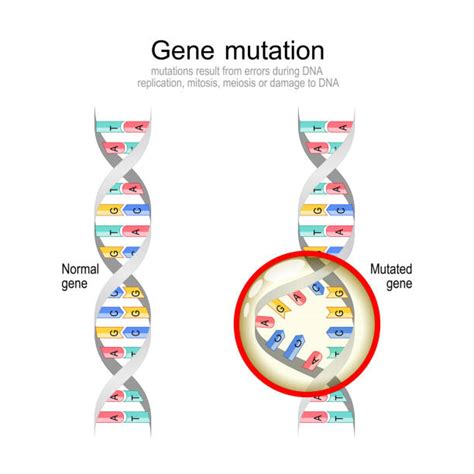
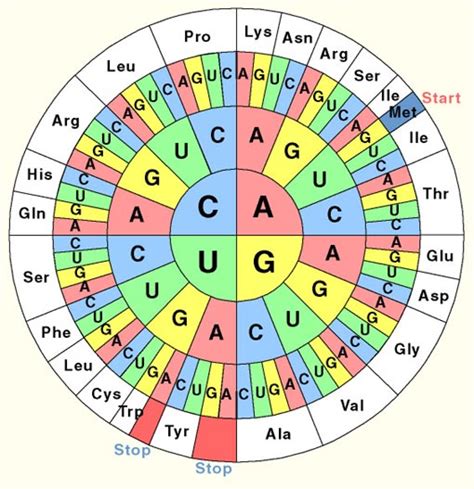
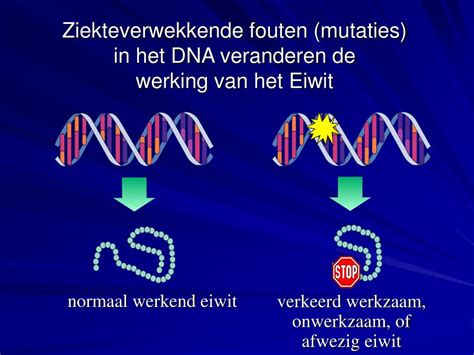
Het belangrijkste verschil tussen missense en nonsense mutatie is dat missense mutatie vervangt een ander aminozuur in de aminozuursequentie terwijl nonsense mutatie een stopcodon voor de mRNA-sequentie introduceert. INHOUD. 1. Overzicht en belangrijkste verschil 2. Wat is een Missense-mutatie 3. Wat is een nonsense mutatie 4. Missense mutations can render the resulting protein nonfunctional, [2] due to misfolding of the protein. [18] These mutations are responsible for human diseases, such as Epidermolysis bullosa, [19] sickle-cell disease, [20] SOD1 mediated ALS, and a substantial number of cancers. [21] [22] Not all missense mutations lead to appreciable protein. Missense mutatie betekenis een missense-mutatie: het nieuwe codon codeert voor een ander aminozuur. een nonsense -mutatie: het nieuwe codon is een stopcodon, waardoor het eiwit ingekort wordt. Bij inserties en deleties is de kans op ingrijpende gevolgen groter: verwijdering of toevoeging van één of meer nucleotiden en verschuiving van het leesraam (reading frame.


DNA mutatie
DNA damage is a physical alteration in the DNA structure, such as a single or double strand break, a modified guanosine residue in DNA such as 8-hydroxydeoxyguanosine, or a polycyclic aromatic hydrocarbon adduct. DNA damages can be recognized by enzymes, and therefore can be correctly repaired using the complementary undamaged strand in DNA as. A mutation is a change in the DNA sequence of an organism. Mutations can result from errors in DNA replication during cell division, exposure to mutagens or a viral infection. Germline mutations (that occur in eggs and sperm) can be passed on to offspring, while somatic mutations (that occur in body cells) are not passed on. DNA mutatie Mutagenesis is the process of an organism's deoxyribonucleic acids (DNA) change, resulting in a gene mutation. A mutation is a permanent and heritable change in genetic material, which can result in altered protein function and phenotypic changes. DNA consists of nucleotides that contain a phosphate backbone, a deoxyribose sugar, and 1 of 4 nitrogen-containing bases (adenine [A], guanine [G.Genetische code
Genetic code is a set of rules used by living cells to translate information encoded within genetic material (DNA or RNA sequences of nucleotide triplets or codons). Genetic code, the sequence of nucleotides in DNA and RNA that determines the amino acid sequence of proteins. Though the linear sequence of nucleotides in DNA contains the information for protein sequences, proteins are not made directly from DNA but by messenger RNA molecules that direct protein formation. Genetische code Genetic code. The story of the genetic code is the story of biology and genetics in the 19th, 20th, and 21st centuries, as well as its promises and its perils. Oswald Avery in , for example, proved that the genetic code — that DNA —was indeed the carrier of hereditary information, ending more than 80 years of productive speculation.Verandering eiwit
De eiwittransitie houdt een verandering in van het voedingspatroon van een groot deel van de Nederlandse bevolking. Deze verandering gaat verder dan alleen eiwitten, want door de eiwittransitie verandert ook de inname van andere voedingsstoffen. De commissie gebruikt de term eiwit-. Die produceren eiwit voor vleesvervangers of diervoeding, maar maken ook gecultiveerde zuivel- en vleesproducten die niet van echt te onderscheiden zijn. Het geniale: je kunt broeikasgassen (CO2) en andere restproducten van de chemische industrie (stikstof, waterstof) gebruiken als voedsel voor die eencelligen.Verandering eiwit De verschuiving van een dieet met meer dierlijk eiwit naar meer plantaardig eiwit is geen simpele vervanging van het een voor het ander. Het gaat om het zoeken naar een balans tussen dierlijk en plantaardig. De verandering in voedingspatroon streeft niet alleen naar een positieve impact op het milieu, maar moet ook bijdragen aan een gezonder dieet.